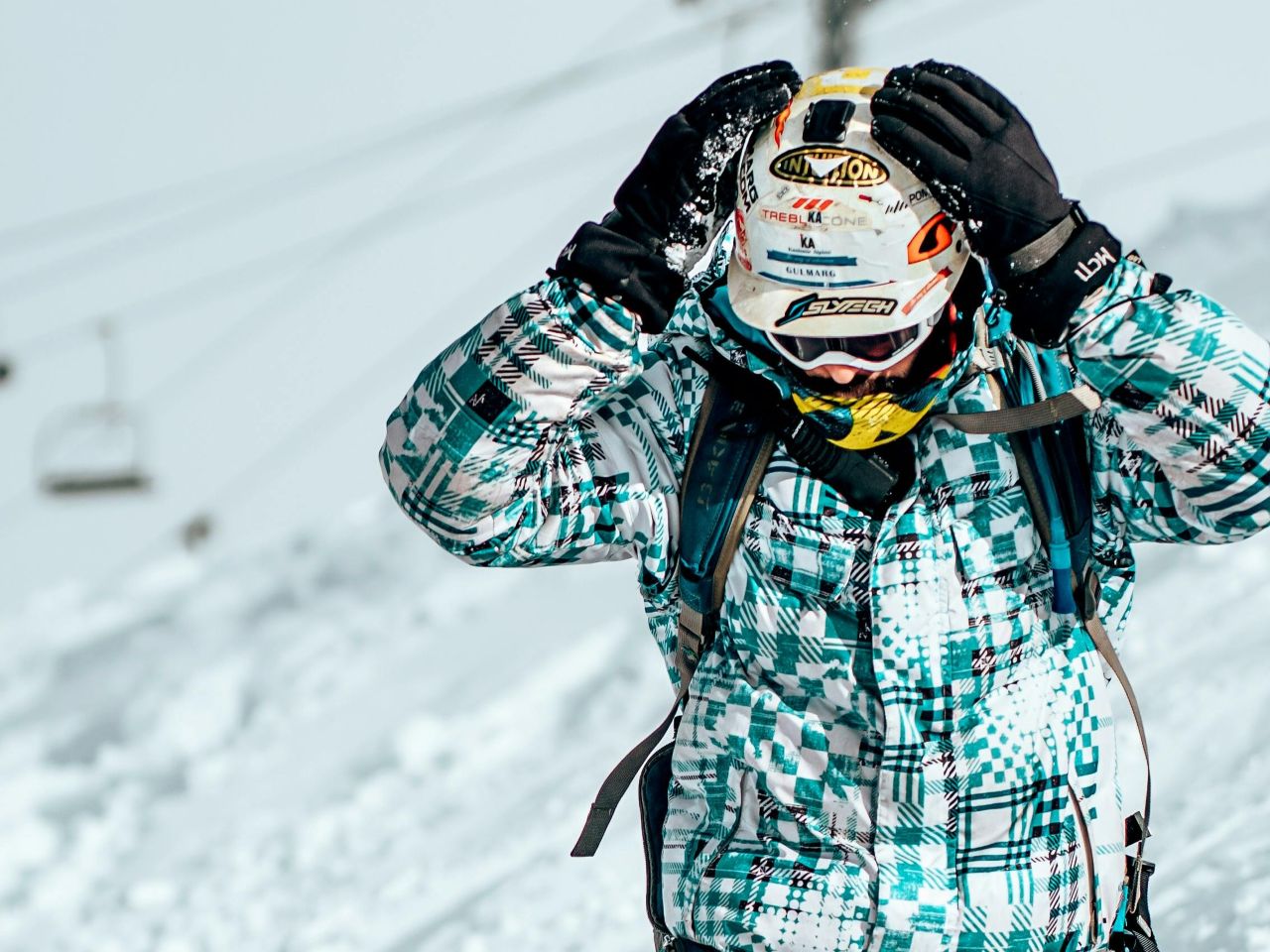









Helmet with a visor or helmet + goggles - what to choose?
One option offers more convenience when putting on the equipment. The other performs better when the weather changes from hour to hour. A helmet with a visor simplifies everything and works well for people who want head and eye protection in one system. A helmet + goggles set, on the other hand, offers greater freedom in choosing lenses, ventilation, and adapting to slope conditions.
This isn't just about appearance. It's about how you ski, what weather you most often encounter on the slopes, whether you wear glasses, and whether you want to react quickly to changes in light. Helmet with a visor or a helmet and goggles set – let's check what's better!
When to choose a helmet with a visor and when a helmet and goggles?
The simplest rule is: a helmet with a visor wins on convenience, and a helmet with goggles gives more control. This is a good starting point, but only the details show what will work better on the slopes.
Helmet with a visor
This solution combines head protection and eye protection in one element. You don't have to adjust goggles separately, worry about the strap, or the gap between the helmet and the frame. The whole thing is quicker to put on, which is why this model often works well for recreational skiers and in mostly predictable weather conditions.
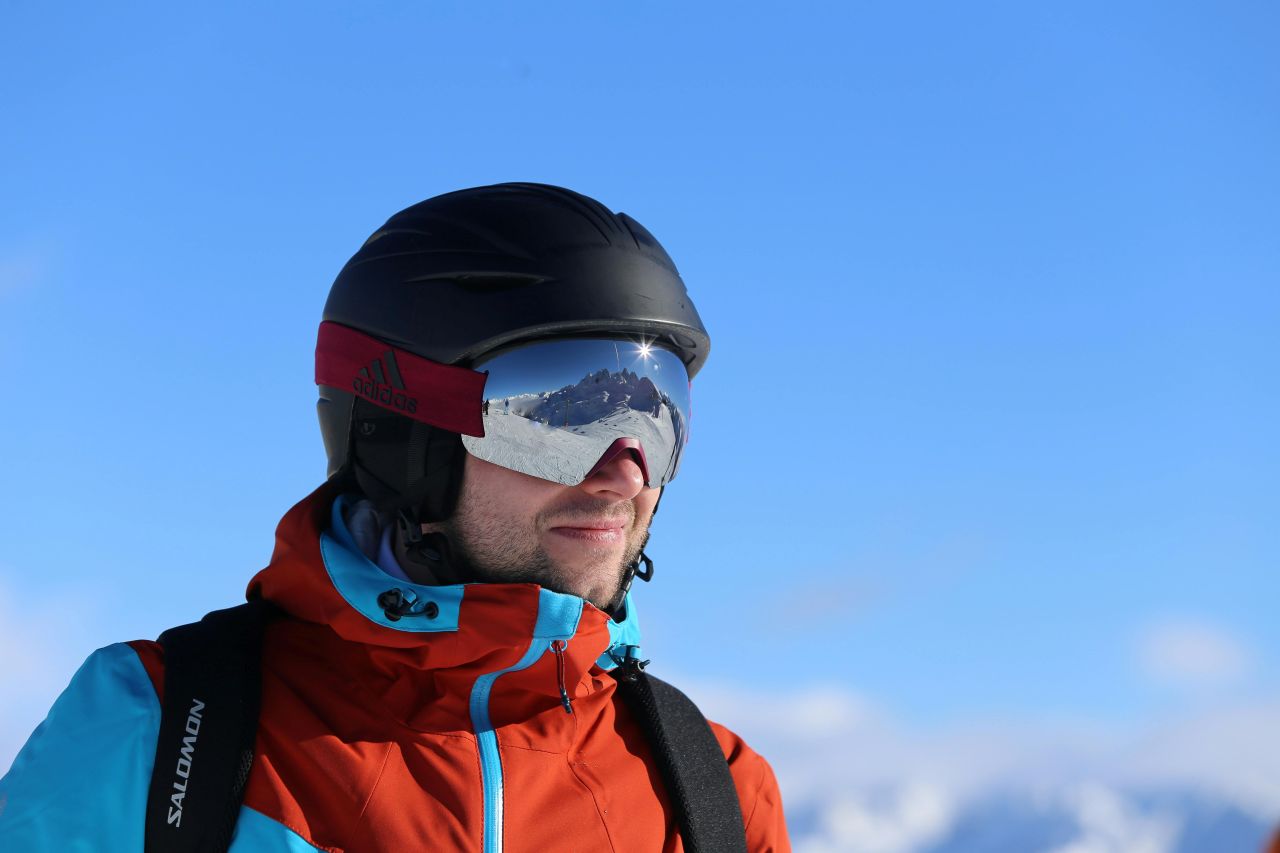
Helmet + goggles set
This set requires more attention when purchasing, but offers more possibilities. You can choose several elements to suit your needs:
- frame shape,
- foam type,
- level of lens tint,
- filter,
- ventilation system.
It's also easier to react to changes in light. When there's fog in the morning and bright sun in the afternoon, an interchangeable goggle lens gives an advantage on the slopes.
Field of view – who performs better?
A helmet with a visor often provides a very wide field of view. This is due to the large surface of the visor and the lack of a distinct frame that limits the image at the sides. On the slopes, this translates into greater comfort of orientation.
Well-designed ski goggles also offer a wide field of view, but much depends on the specific model. The differences can be significant. Some goggles have a wide, cylindrical or spherical lens and very good peripheral vision. Others limit the image more through a thicker frame or a less favorable profile.
Ventilation and fogging – goggles often win here
If fogging is one of your main problems, a helmet + goggles set usually has an advantage. This is due to the design: goggles often wick away moisture better, and their ventilation systems are more developed than in many helmets with visors.
During intense skiing, the body quickly heats up. This is accompanied by moisture from breath, sweat, and temperature changes between the inside of the equipment and the surroundings. In such a situation, even a good anti-fog coating does not solve all problems. If air circulation works poorly, the visor or lens will start to fog up.
A helmet with a visor does not necessarily fog up often, but it is more sensitive to high humidity, exertion, and sudden temperature changes. For some users, this will not be a problem. For others, it will be irritating after just a few runs. Therefore, people who ski dynamically, move a lot, or often encounter wet snow and positive temperatures, usually rate classic goggles better.
Helmet with a visor and prescription glasses
In this context, a ski helmet with a visor often performs more favorably. It provides more space for frames and does not press glasses against the face as tightly as many classic goggles. For people who wear glasses, this is one of the most important advantages.
OTG goggles remain a sensible alternative. Many models work really well with glasses. However, you need to check this in person, because the theory from the specification does not always match practice. Even slight pressure on the temples can ruin comfort after an hour of skiing.
Lens and visor replacement – which option offers greater flexibility?
If you care about quick adaptation to conditions, ski goggles usually offer more possibilities. This is their great advantage over helmets with visors.
In goggles, it is easier to replace the lens with a different light transmission category. In helmets with visors, visor replacement may be possible, but it can be less convenient, the choice of variants can be more limited, and the cost of buying an additional visor can be high.
Weight and ergonomics – a small difference, a big impact after a few hours
A helmet with a visor has a different weight distribution than a classic helmet. The visor shifts some of the weight forward. This will not be a problem in every model, but it is worth checking. Why? If the helmet is poorly balanced, the neck gets tired faster, and the entire equipment becomes more noticeable during turns and frequent changes of position.
A helmet + goggles set distributes the load differently. Goggles exert pressure on the face, but do not change the center of gravity as much as an integrated visor. As a result, some skiers prefer the integrity of a helmet with a visor, while others feel more natural in a classic setup.
Head and eye protection – what really matters?
Safety begins with the quality of the helmet, not whether it has a visor or works with goggles. This is the most important thing that is easy to forget when the choice starts to revolve around comfort and appearance.
Important factors include:
- shell construction,
- quality of energy-absorbing foam,
- stability of the fastener,
- compliance with EN 1077 standard,
- additional rotational protection systems.
Summary
If you primarily value comfort, simplicity, and easier use with prescription glasses, a helmet with a visor will be a very sensible choice. It will work well for calmer skiing, stable weather, and when you don't want to choose goggles separately.
If flexibility, better ventilation, and the ability to precisely adjust visibility to conditions are more important to you, choose a classic helmet + goggles set. This solution performs better both in changing conditions and during greater exertion.
It is most reasonable to view this choice of slope accessories not through the prism of fashion, but of your skiing style. Comfort on the slopes does not come from one "best" solution – it comes from well-matched equipment.