













Ski glasses – see what a difference good equipment makes!
Not every ski trip means full enclosure and heavy, classic goggles. For cross-country skiing, ski touring, or lighter training in the mountains, something else matters – lightness, breathability, and maximum freedom. This is why ski glasses in the form of sports half-glasses were created, combining eye protection with greater movement dynamics.
Ski glasses are not necessarily ski goggles
Contrary to appearances, ski glasses and goggles do not necessarily mean the same sports equipment.
When talking about goggles, one usually thinks of fully enclosed eye protection worn for shredding on the slopes. Ski goggles are meant to be a barrier protecting the visual apparatus from ice, wind, or excessive sun. They are often interchangeably referred to as glasses, but things are a bit more complicated.
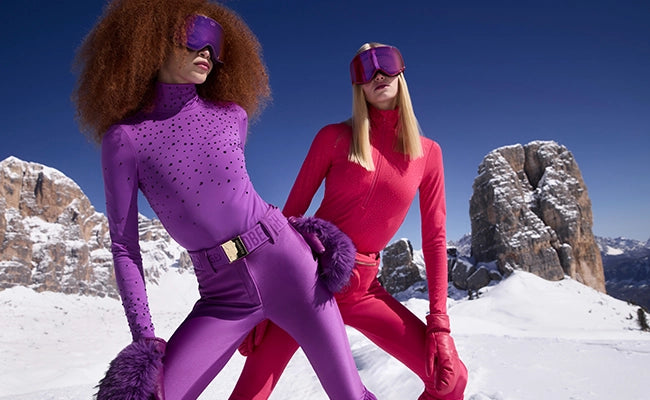
Ski glasses also aim to protect the eyes, but they feature a slightly different construction. At first glance, they look like a hybrid of classic goggles and sunglasses (due to the strap encircling the head and the simultaneous absence of sealing foam in the lower part of the construction).
Ski glasses designed for movement and intense effort
You put on ski glasses… and after a while, you forget about them. They don't restrict your field of vision, don't impede air circulation around your face, and don't interfere during intense effort. Instead of a sealed construction, you get a semi-open form that performs better in the context of varying activity pace and during particularly intense training (allowing sweat to dry faster).
This type of glasses works not only on cross-country trails, where you might risk being hit by a stray branch. You can easily use them for cycling, trekking, or running. Their versatility stems from their construction – lightweight, yet well-fitting, designed for various forms of movement, not for static conditions on the slope.
Lenses in ski glasses – what to remember?
The type of lenses in the frames is a key issue in the context of the usefulness of ski accessories, as well as safety in the mountains. After all, lenses determine how you see the terrain and how quickly you can spot a potential threat.
What should their selection depend on? Simply put, it mainly concerns lighting conditions.
Tint categories S1–S3
Categories S1–S3 determine how much light reaches the eye through the lens. The VLT (Visible Light Transmission) parameter gives this value as a percentage. The higher the VLT, the more light passes through the glass.
- S1 (43–80% VLT) – very bright lenses. Work well in low visibility conditions (e.g., fog, snowfall, cloudiness).
- S2 (18–43% VLT) – intermediate range. A good choice for changing weather.
- S3 (8–18% VLT) – strong tint. Option designed for very sunny days and reflections from snow.
Types of lenses
The choice of lens should depend on the conditions in which you most often ski.
Photochromic lenses
Darken automatically in response to light. The change takes from several seconds to several minutes, but can be slower in lower temperatures. Photochromic lenses work well in changing conditions.
Polarized lenses
Eliminate glare from snow and ice. On the other hand, polarized lenses can reduce the visibility of contrasts on icy surfaces and make it difficult to assess snow texture. Additionally, polarization can hinder the readability of some LCD screens.
Mirrored lenses
As the name suggests, mirrored lenses have a reflective coating. This coating not only reduces light intensity but also adds character to your sports style.
Colored lenses
Increase contrast in specific conditions:
- yellow, pink, and amber – improve visibility in low light,
- brown and gray – accurately reproduce colors in bright sun.
Coatings
Serve various functions:
- UV filters – block up to 100% of UV-A and UV-B, thereby protecting the retina,
- anti-fog coatings – use a hydrophilic layer or double glass to limit fogging,
- anti-reflective coatings – reduce reflections and increase contrast.
UV protection in the mountains
UV radiation increases with altitude. Additionally, snow reflects up to 80% of radiation. What does this mean? Lack of eye protection can have serious health consequences, including leading to:
- so-called snow blindness,
- retinal damage,
- increased eye fatigue.
How to protect your eyes in the mountains?
Good ski glasses not only limit the amount of light but, above all, filter out its harmful part. In the context of ski glasses, this means the presence of the UV400 marking. Such lenses block almost all UV-A and UV-B radiation (this means about 99–100% protection against the harmful effects of the sun).
Safety certificates for premium ski glasses
The most important safety markings on ski goggles are:
- CE mark,
- confirmations of compliance with standards for eye protection, presence of UV-A and UV-B filters, and material durability.
CE mark on ski glasses
The CE mark confirms that the glasses meet the safety requirements in force in the European Union. This mark is not a marketing element but a real declaration of conformity with specific standards (e.g., those concerning eye protection or quality of workmanship).
Other standards
- EN 174:2001 – specifies impact resistance, optical quality, and light filtration.
- EN ISO 12312-1 – regarding sun filters; confirms sun protection categories.
- EN 166 – general eye protection standard.
Choose ski glasses tailored to your needs
You don't always need full goggles. Sometimes lightweight ski glasses work better. They provide greater freedom of movement and better ventilation even during intense effort. At the same time, they protect your eyes from intense light, wind, or mechanical damage. In short, exactly what most threatens your eyesight in the field.
It's not worth saving on the health of your eyes. Premium models of ski glasses are an investment in stable construction, optimal fit, and higher lens quality.
Discover the ski glasses available at SportowyButik.pl and choose a model that will provide you with everything that matters most: a clearer image, greater durability, and less eye fatigue.