












Ski goggles or glasses – what to choose?
For many winter sports enthusiasts, spring skiing is the most wonderful time of the year. Longer days, higher temperatures, and powerful sun on the slopes make choosing the right equipment crucial. One of the most common questions skiers ask themselves during this period is: goggles or glasses for skiing? This choice is not just about aesthetics or current premium fashion trends, but primarily about safety, health, and comfort during descents.
In spring, weather conditions can be deceptive. On the one hand, we enjoy beautiful weather; on the other hand, intense sun rays reflecting off the white snow can be blinding and harmful. To fully enjoy the ride, we must provide our eyes with the best possible barrier. In this article, we will analyze both solutions, considering advanced technology, high-quality materials, and the specific needs of demanding users who prioritize the premium segment.
Advantages and disadvantages of ski goggles
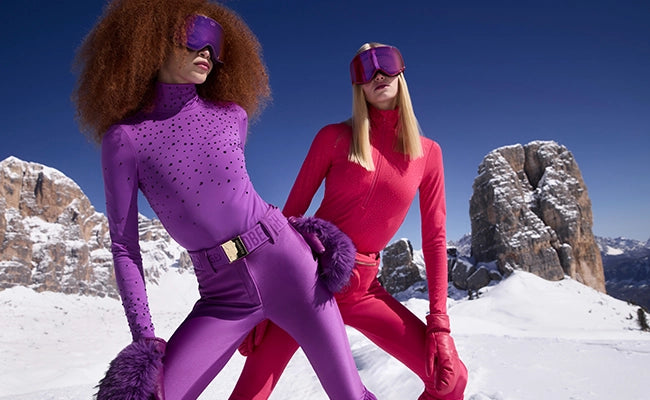
Classic women's ski goggles are an absolute fundamental piece of equipment for most professionals. Their main task is not only to improve visibility but also to provide comprehensive protection for the upper part of the face. Goggles fit snugly to the skin, covering almost half of the face. This provides effective protection against cold, wind, and icy snow particles, which at higher speeds can be painful for the eyes.
When choosing ski goggles, we invest in equipment that guarantees great comfort while skiing in difficult conditions. Higher-end models, available at Sportowy Butik, are equipped with ventilation systems to prevent fogging and lenses that reduce glare and improve contrast. An additional advantage is that goggles are much more stable. Thanks to a wide strap, they stay in place even during dynamic turns or potential falls on the slope. For many skiers, physical safety is also important – the construction of goggles absorbs impacts, protecting the eye sockets from injuries.
When to choose ski glasses?
Despite the dominance of goggles, ski glasses (often confused with traditional sunglasses, but with a sporty character) are gaining popularity precisely during spring trips. When the sun is very strong and the temperature exceeds zero degrees, goggles can cause excessive facial sweating. In such situations, glasses provide greater freedom and better air circulation.
Modern sports glasses offered by leading manufacturers are lightweight and extremely stylish, allowing you to maintain an elegant look even after taking off your skis. They are a practical solution during breaks in shelters, allowing you to comfortably enjoy a meal outdoors. However, it should be remembered that standard, traditional glasses for everyday use may not provide sufficient protection during fast riding. The lack of side shields means that wind and UV rays still reach the eyeball from the side, which can lead to tearing and irritation.
Eye protection against UV radiation and sun
Regardless of whether you choose goggles or glasses, the most important parameter is the UV filter. In the mountains, due to the altitude and light reflection from the snow, exposure to harmful radiation is several times higher than in the valleys. Good equipment must offer full protection against harmful UV radiation (UVA, UVB, and UVC).
A key term you'll encounter when choosing is visible light transmission (VLT). Lenses are divided into categories from S0 to S4:
-
S0-S1: Designed for night riding or very low light (often yellow or clear lenses that improve visibility).
-
S2: Universal, ideal for cloudy days with light clearings.
-
S3-S4: Dedicated for strong sun and clear skies.
In spring, with strong sun, S3 category lenses work best, effectively reducing glare and preventing squinting. The best ski goggles also have polarizing coatings that eliminate ice glare, which is extremely important for safety.
How to choose ski goggles for your helmet and face?
For the equipment to fulfill its role, it must be properly fitted. Even the most expensive models will not be effective if they are too large or do not match the shape of the face. The first rule is: first women's ski helmets, then goggles. Both parts of the equipment must work together. There should be no "gap" between the upper edge of the goggles and the helmet, through which wind will hit the forehead.
When trying them on, check that the goggles do not press on your nose and do not restrict your field of vision. A good fit is one where the foam softly adheres to your face and the strap rests stably on the helmet. It is worth paying attention to models with interchangeable lenses – this is an investment that allows you to adapt the goggles to different lighting conditions in seconds, using, for example, the manufacturer's magnetic systems.
Solutions for people wearing prescription glasses
People with vision defects face an additional challenge. Traditional prescription glasses rarely work well with standard goggles. The solution is special models marked as OTG (Over The Glasses). They have special cutouts in the foam and a deeper frame, so that prescription glasses fit under them without pressing on the temples.
An alternative is to use contact lenses, which offers the greatest freedom of movement and eliminates the problem of glasses fogging up under goggles. However, if you prefer glasses, make sure that the chosen appropriate ski goggles have adequate ventilation to prevent water vapor condensation on prescription lenses. Some manufacturers also offer optical inserts mounted inside the goggles, which is a very convenient and professional solution.
Summary – what to choose for spring skiing?
The decision: goggles or glasses for skiing on a sunny day depends on your riding style and individual preferences. If you plan intense descents, off-piste skiing, or fast carving turns, choose professional ski goggles. They will provide maximum safety and protection from sun, wind, and cold. If, on the other hand, a spring trip means relaxation, recreational skiing, and long breaks on terraces, it's worth having sporty ski glasses handy.
In the Sportowy Butik offer, you will find products that combine advanced technology with luxurious design. Regardless of your choice, remember to opt for proven equipment that has a certified UV filter and is made of damage-resistant materials. To take care of your investment, it is also worth getting goggle cases, which will protect the lenses from scratches during transport.
FAQ – Frequently Asked Questions
Are regular sunglasses suitable for skiing?
Traditional glasses can be used during breaks, but for actual skiing, specialized ski glasses or goggles are recommended. Regular models do not protect against wind and can be dangerous in case of a fall (risk of frame breakage and face injury).
What ski goggles should I choose for very strong sun?
On sunny days, models with S3 or S4 category lenses in black, grey, or brown work best. These lenses have low light transmission, which protects the eyes from glare and reduces eye strain.
What can I do to prevent goggles from fogging up?
Choose goggles with double lenses and an advanced ventilation system. It is also important not to cover the ventilation holes with a helmet or balaclava. If you wear prescription glasses under goggles (OTG models), make sure both accessories have an anti-fog coating.


